The best USB hubs depend on what you need to connect, from everyday peripherals to displays, memory cards, and powered desk setups. These picks span compact USB-C adapters and multiport desktop hubs, so check host compatibility, charging needs, and the port mix before choosing.
Quick Top Products
SABRENT USB-C 6-Port Hub & M.2 SSD Dock
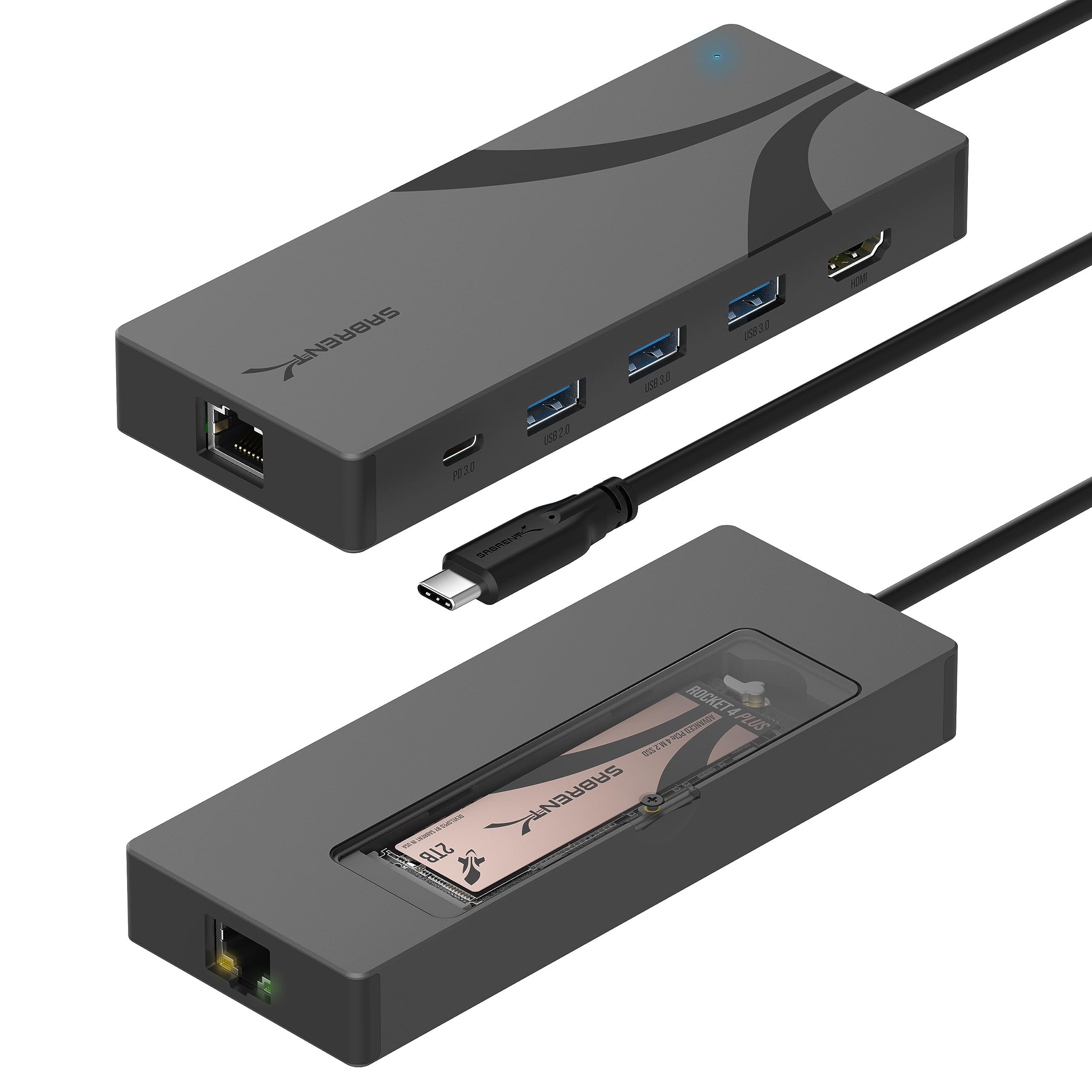
- Adds HDMI, Gigabit Ethernet, USB ports, and an M.2 SSD slot.
- Supports up to 90W power delivery passthrough.
- Accepts M.2 SATA or NVMe SSDs in several form factors.
Best For: Laptop users who want display, Ethernet, and expandable M.2 storage through one USB-C hub.

SABRENT 5-in-1 USB-C Hub (HB-TG5P)
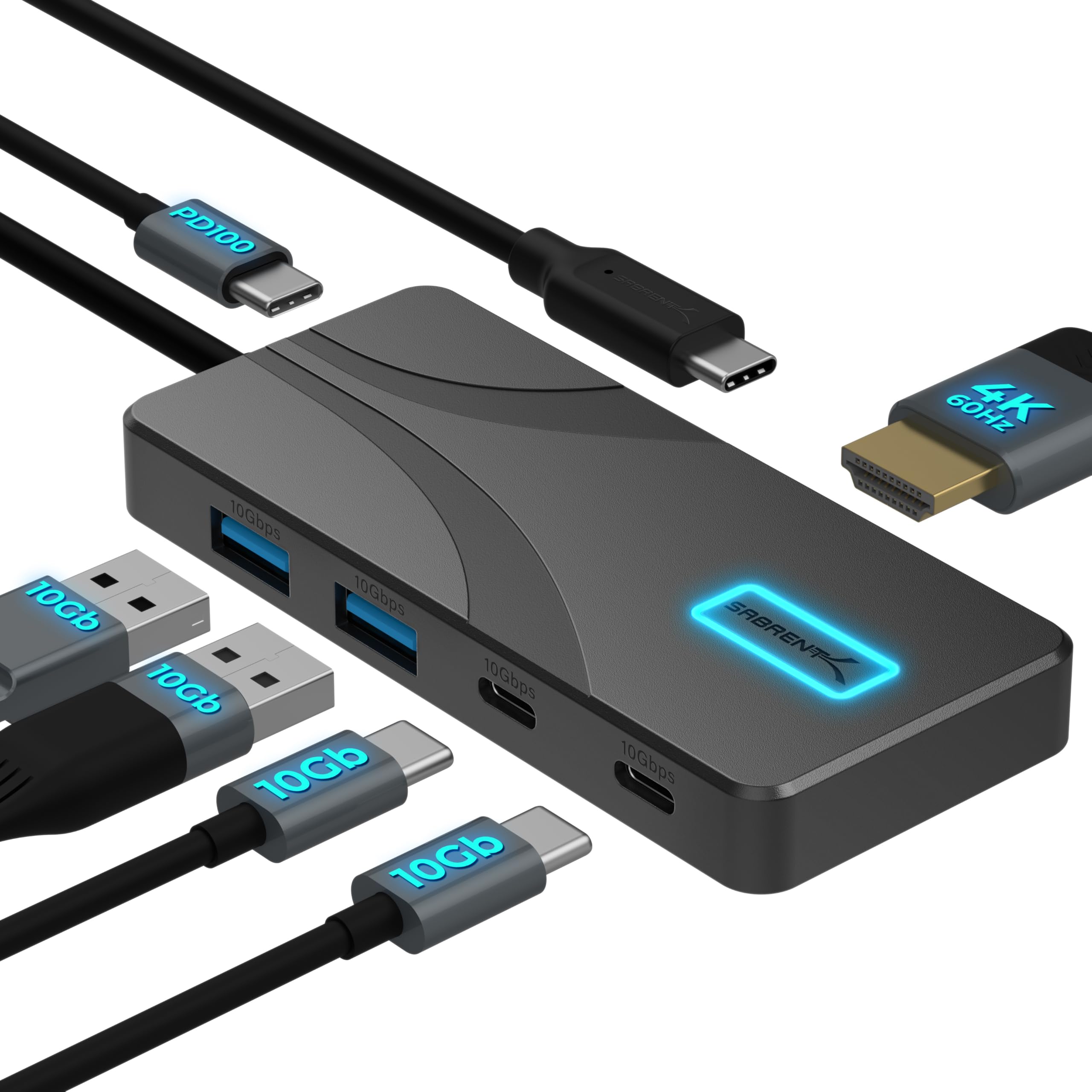
- Provides four 10Gbps data ports plus HDMI.
- Passes up to 80W to a laptop from a 100W charger.
- Has a 60cm integrated USB-C cable.
Best For: Laptop and tablet users who want several fast USB ports, 4K display output, and passthrough charging.
j5create USB-C Multi-Port Hub (JCD373EC)
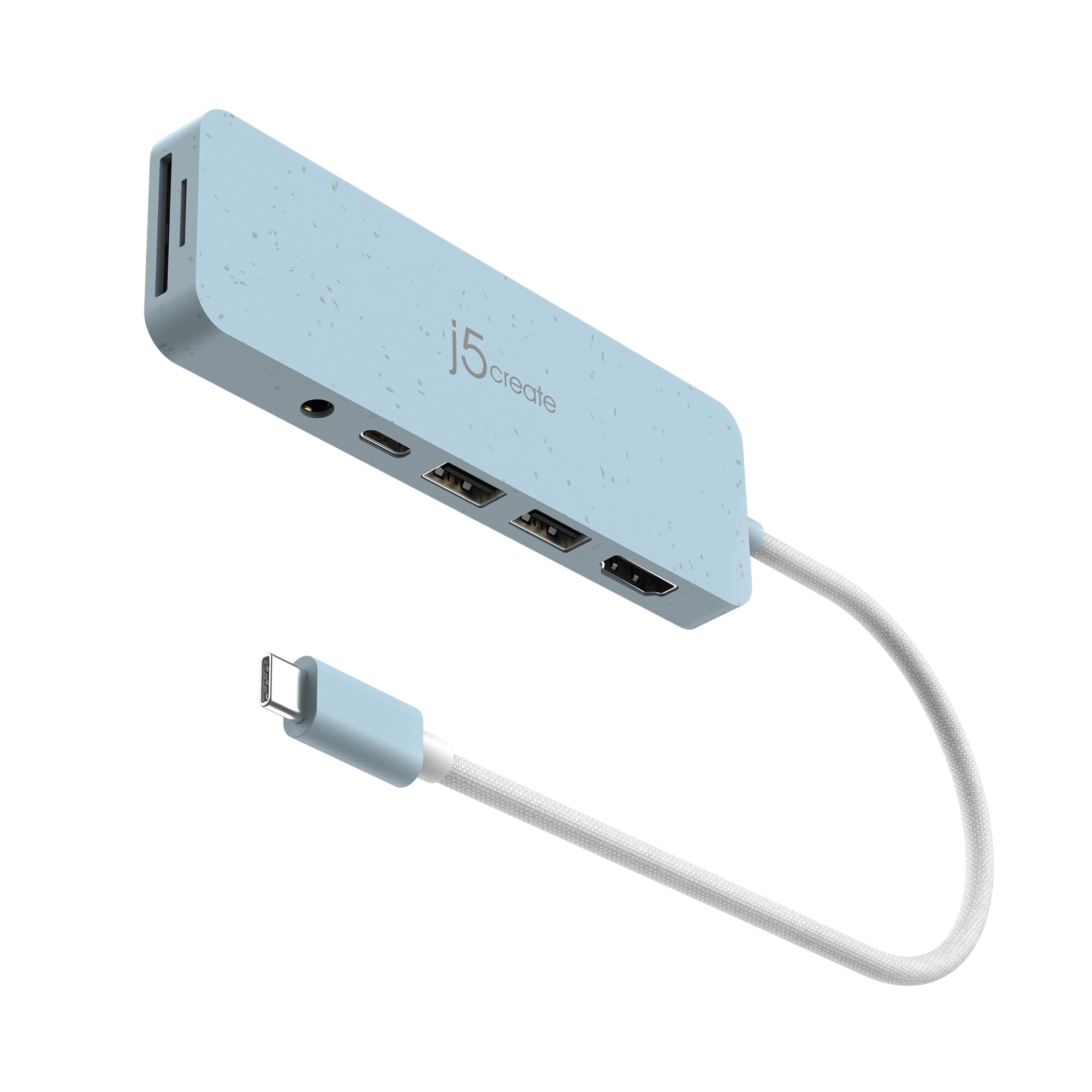
- Combines HDMI, two USB-A ports, PD, audio, and card readers.
- HDMI supports up to 4K at 30Hz.
- Works with a range of USB-C computers and tablets.
Best For: USB-C laptop users who need HDMI, audio, card-reader, and USB-A connections in one adapter.
SABRENT 10-Port Powered USB 3.0 Hub (HB-B7C3)
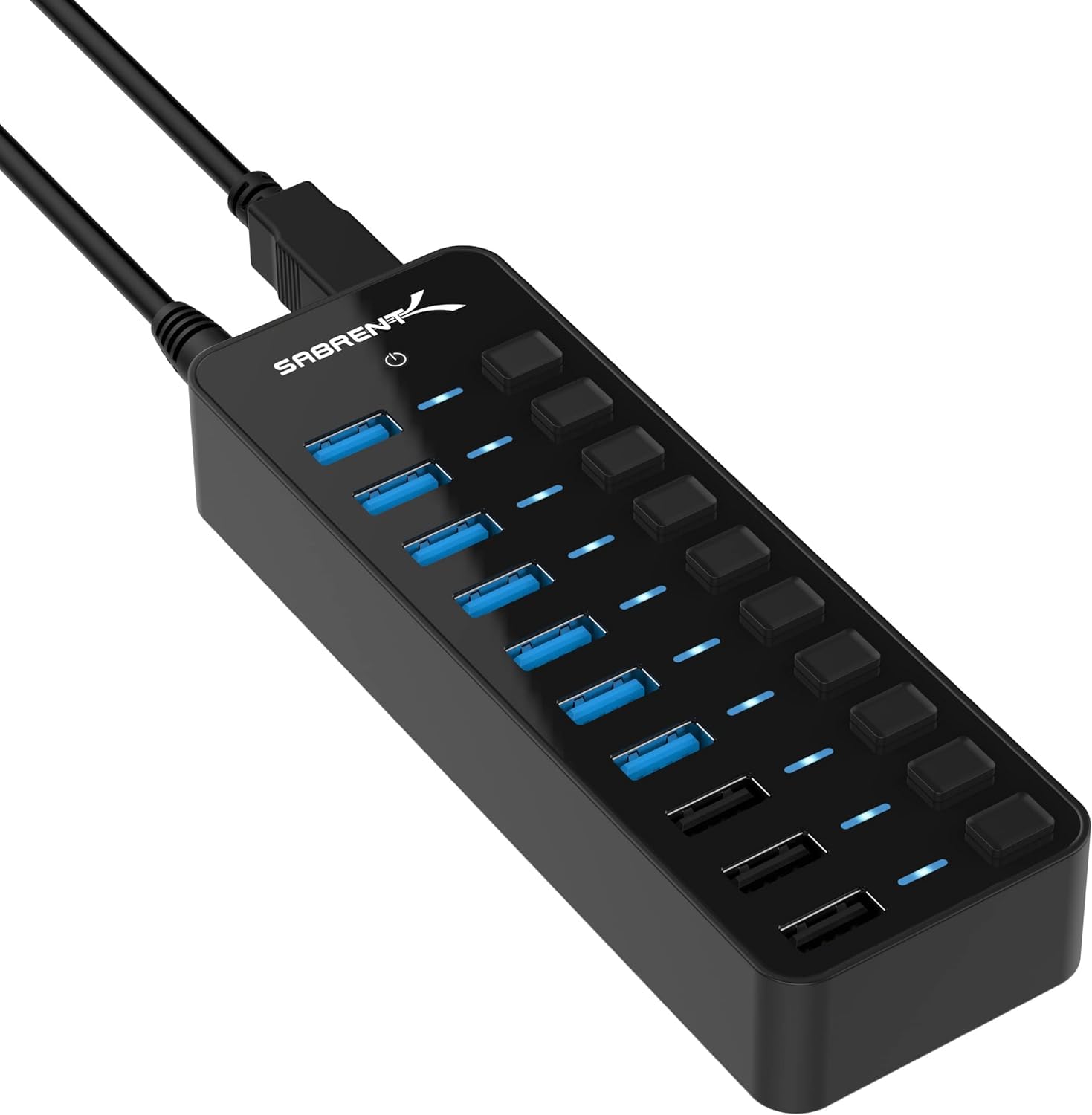
- Connects up to seven USB 3.0 devices at once.
- Adds three dedicated charging ports.
- Includes a 60W power adapter and individual port switches.
Best For: A desk setup with several USB accessories and separate ports for charging mobile devices.
SABRENT 16-Port USB 3.0 Data Hub (HB-PU16)
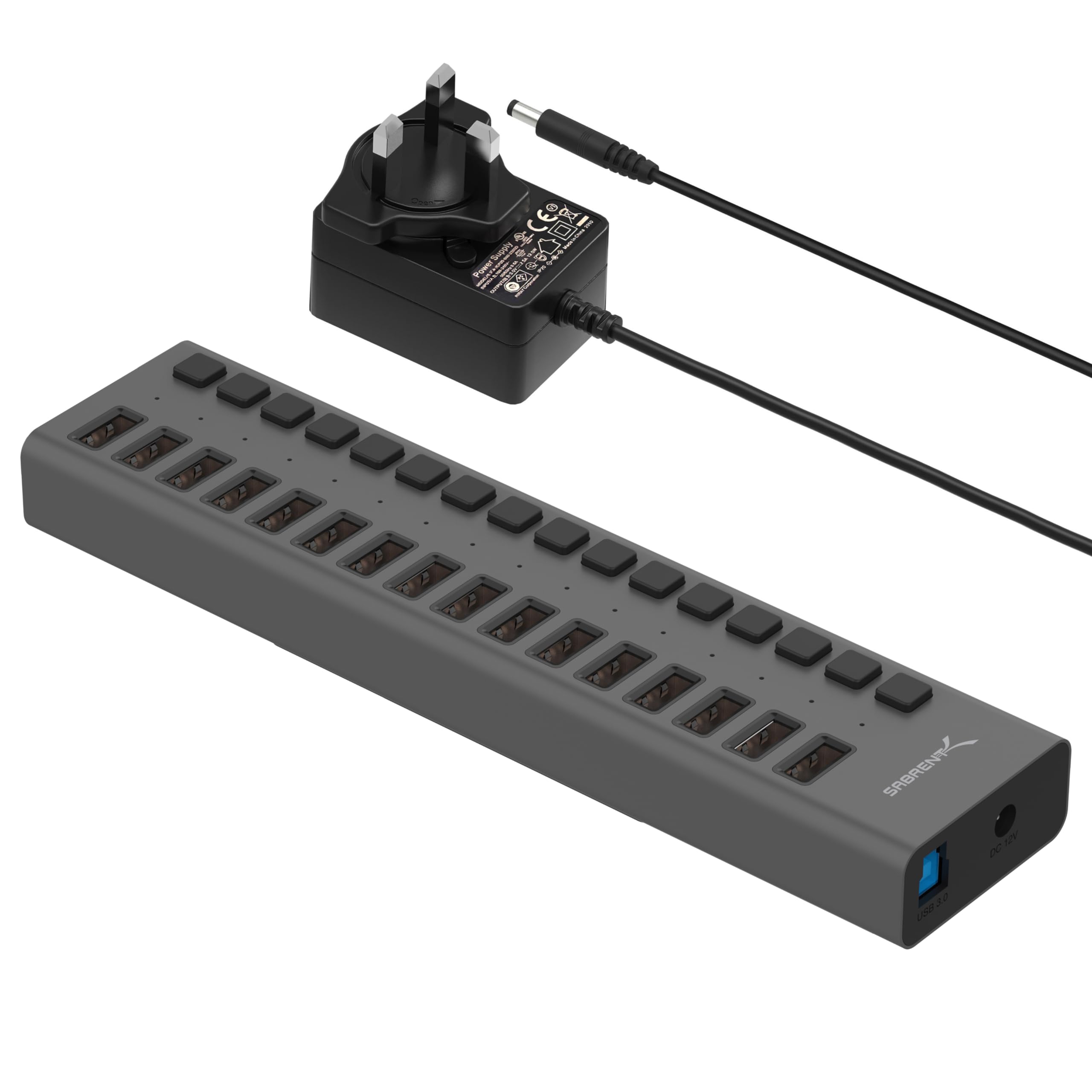
- Provides 16 downstream USB 3.0 ports.
- Supports data transfer up to 5Gbps.
- Includes individual power switches and blue status LEDs.
Best For: Users who need many USB-A data connections for drives, card readers, and other peripherals.
SABRENT USB-C Hub, 4K HDMI, 90W PD (HB-SHPU)
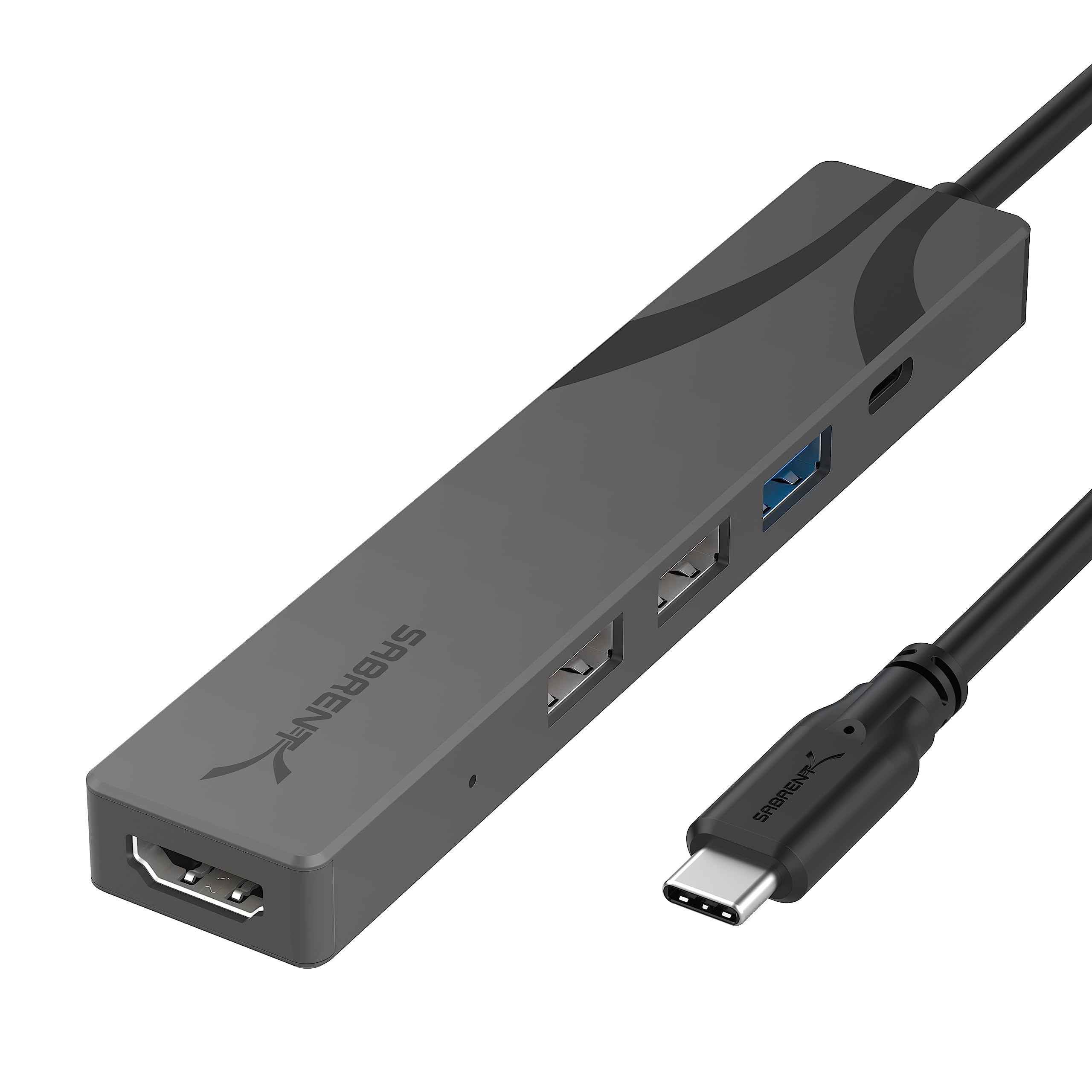
- Combines three USB-A ports, HDMI, and USB-C PD.
- HDMI output supports up to 4K at 60Hz.
- Uses a short integrated USB-C cable.
Best For: Travelers who want HDMI, three USB-A ports, and laptop charging in a compact USB-C hub.
SABRENT 4-Port Powered USB 3.0 Hub (HB-UMP3)
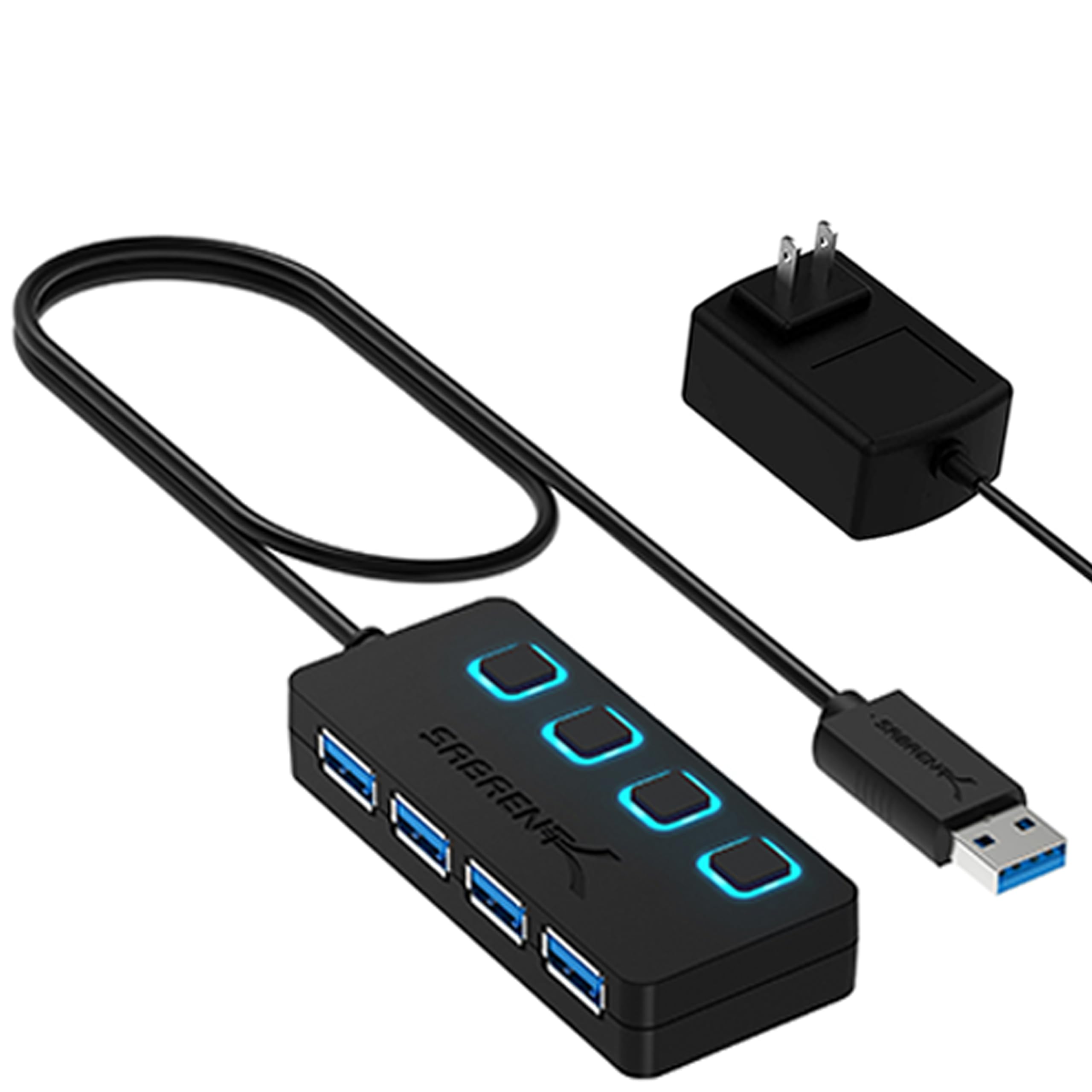
- Adds four USB 3.0 ports.
- Includes individual switches and LED indicators.
- Comes with a 5V/2.5A power adapter.
Best For: A small desktop setup that needs four USB 3.0 ports, switched control, and external power.
SABRENT USB-C 5-in-1 Hub (HB-U3CR)
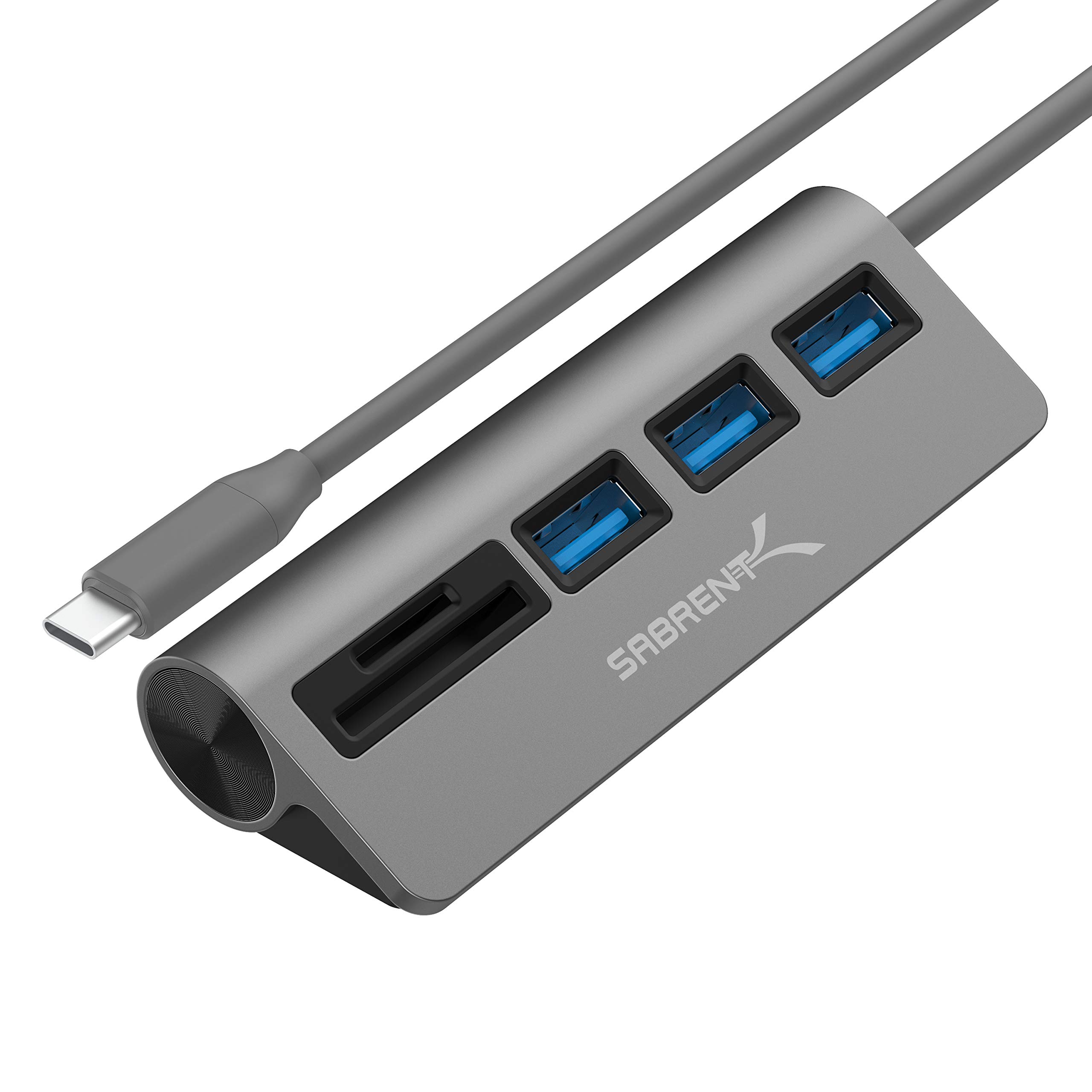
- Includes three USB 3.0 Type-A ports.
- Has an all-in-one card reader for SD and microSD formats.
- Supports data transfers up to 5Gbps.
Best For: Laptop users who transfer files from SD or microSD cards and need extra USB-A ports.
SABRENT 4-Port Aluminum USB 3.0 Hub (HB-MC3B)
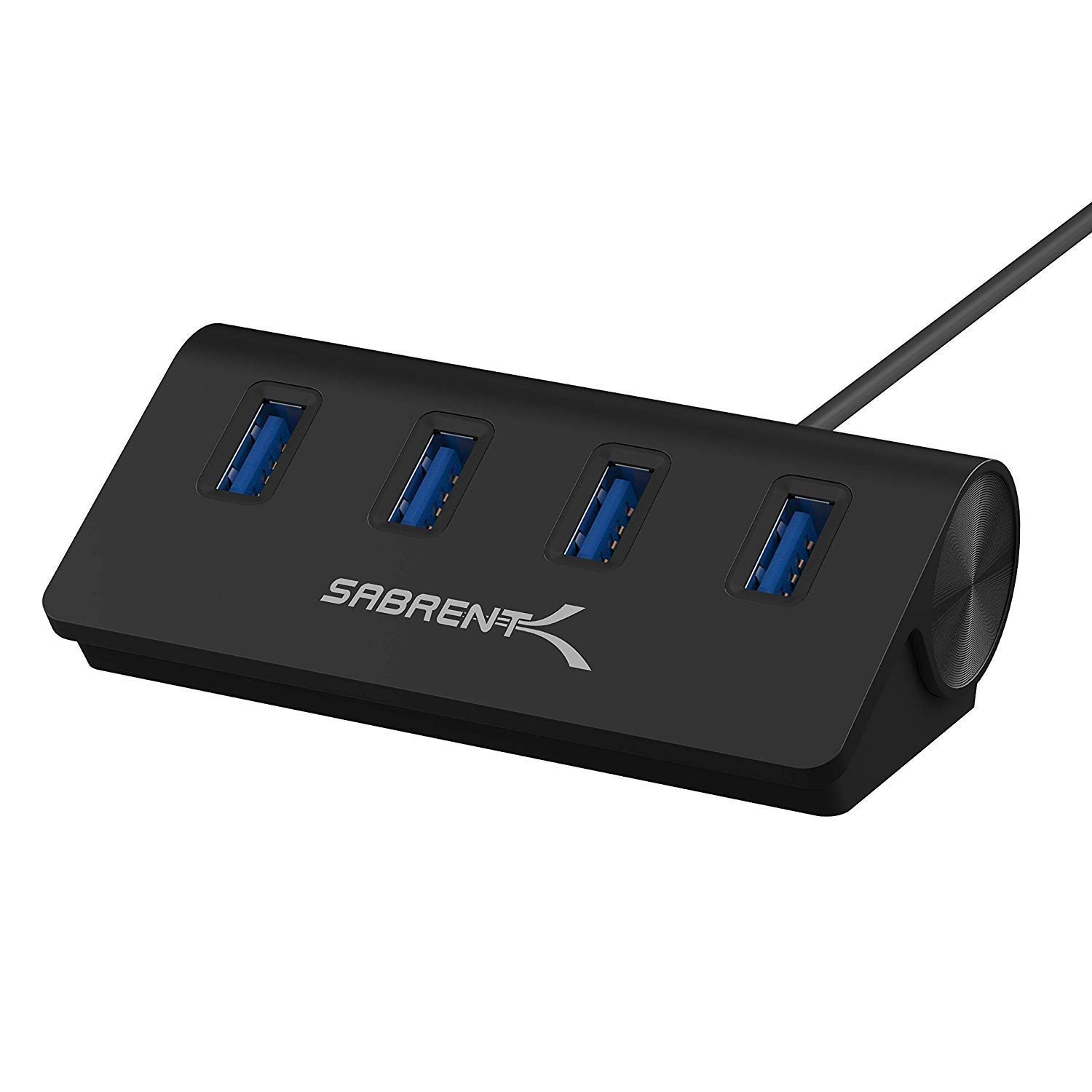
- Adds four USB 3.0 ports to a compatible device.
- Includes a 2.5-foot USB 3.0 cable.
- Supports transfer speeds up to 5Gbps.
Best For: Users who want a simple four-port USB-A hub with a longer cable for desk placement.
Storage and Network Expansion
SABRENT USB-C Hub & SSD Enclosure, 6-Port Dock with M.2 SSD Slot, 90W Power Delivery, USB 3.0 & 2.0 Ports, 4K HDMI, RJ45 Gigabit Ethernet (HB-6PNV)
This USB-C hub combines everyday expansion with features often handled by separate adapters. It has three USB-A ports, HDMI output up to 4K at 60Hz, Gigabit Ethernet, and an internal M.2 slot for SATA or NVMe SSDs.
The host connection supports up to 90W power delivery passthrough, while the SSD connection supports up to 5Gbps. It suits a laptop setup that needs both wired networking and portable storage.
Check that your device supports DisplayPort Alternate Mode for HDMI, and note that the power adapter and SSD are not identified as included items.
Best For: Laptop users who want display, Ethernet, and expandable M.2 storage through one USB-C hub.
| Pros | Cons |
|---|---|
|
|
Choose this if Ethernet and an internal M.2 drive matter alongside laptop ports. Its mix of networking and storage makes it more specialized than a simple port expander.
Before buying, confirm that your USB-C host supports DP Alt Mode and check which M.2 size and interface your SSD uses. The hub supports 2242, 2260, and 2280 drives, but the SSD itself is not specified as included.
Fast USB-C Data and Display
SABRENT USB C Hub 5-in-1, 10Gbps USB-A & USB-C Ports, Single 4K@60Hz HDMI, 100W PD Input, 80W Laptop Charging, Compact Aluminum Docking Station for MacBook, iPad, Laptops & Tablets (HB-TG5P)
This compact aluminum dock gives a USB-C laptop or tablet four high-speed peripheral ports and a separate power input. Two USB-A and two USB-C data ports support up to 10Gbps, while HDMI output reaches 4K at 60Hz.
Connect a 100W USB-C charger to pass up to 80W to the laptop; the power adapter is not included. A backlit logo doubles as a power switch, and the integrated 60cm cable suits desk or travel use.
Display output requires DP Alt Mode, and extended desktop mode also requires MST support from the host.
Best For: Laptop and tablet users who want several fast USB ports, 4K display output, and passthrough charging.
| Pros | Cons |
|---|---|
|
|
Pick this for a modern laptop setup with a mix of USB-A and USB-C accessories, a 4K monitor, and passthrough charging. Its data ports are faster than those on several basic hubs, though the display features depend on the host as well as the dock.
Check DP Alt Mode and MST support if you need an extended desktop, and budget for a separate 100W charger to use the charging input.
Audio, Card, and Display Ports
j5create USB-C Multi-Port Hub with Power Delivery with 4K HDMI/2 USB-A 5Gbps/PD 100W Charging SD&Micro SD/3.5mm Audio | for MacBook Pro&Air/iPad Pro/iMac/Surface/XPS/Thinkpad/Galaxy/and More(JCD373EC)
The j5create adapter brings several common laptop connections together: HDMI, two USB-A data ports, an SD and microSD reader, a 3.5mm audio jack, and USB-C power delivery. The HDMI output supports up to 4K at 30Hz, and its PD port supports up to 100W charging.
It is a practical fit for work or travel when you regularly connect a monitor, memory cards, headphones, and USB accessories. Confirm that your host supports the required USB-C functions, and keep the 30Hz HDMI limit in mind if smooth high-refresh display output is important.
Best For: USB-C laptop users who need HDMI, audio, card-reader, and USB-A connections in one adapter.
| Pros | Cons |
|---|---|
|
|
Choose this when audio and memory-card access are as useful as extra USB ports. It has a broader connector mix than a port-only hub, and its HDMI supports 4K resolution, but the 30Hz ceiling may matter for some monitor workflows.
Check your computer's USB-C display and charging support, plus whether you need a separate charger for the PD input.
Powered Hub with Charging Ports
SABRENT 10-Port USB 3.0 Hub, Individual Power Switches and LEDs, 3 Smart Charging Ports, 60W Power Adapter, for PC, Mac, Xbox, PS5, Laptop, Desktop, USB Devices (HB-B7C3)
This powered hub has seven USB 3.0 data ports for peripherals, plus three dedicated charging ports. Each data port has its own power switch and LED, which makes it easier to disconnect individual devices without unplugging them.
The included 60W adapter supplies power to the hub, while the charging ports auto-detect devices and provide up to 2.4A per port. It is a useful desktop choice for drives, input devices, and phones or tablets.
The three charging ports are distinct from the seven data connections, so check that arrangement against the devices you plan to attach.
Best For: A desk setup with several USB accessories and separate ports for charging mobile devices.
| Pros | Cons |
|---|---|
|
|
This suits a desk with multiple data peripherals and a separate need to charge phones or tablets. Its included adapter and per-port switches distinguish it from unpowered hubs, while the charging connections are dedicated rather than extra USB data ports.
Check whether seven data ports are enough and whether your devices can use the charging ports' stated 2.4A maximum per port.
Large 16-Port Data Expansion
SABRENT 16-Port USB 3.0 Data Hub and Charger with Individual Power Switches, 90W High-Power Output (HB-PU16)
With 16 downstream USB 3.0 ports, this hub is aimed at a crowded desktop or workstation with many USB-A accessories. It supports data rates up to 5Gbps and is compatible with USB 2.0 and USB 1.1 devices.
Individual power switches and blue LEDs help manage connected devices, while plug-and-play and hot-swap support simplify setup. The product is also described as a charger, but the available details do not identify a charging rate or power adapter.
Check what power supply comes with the offer and whether your host has enough USB bandwidth for the attached devices.
Best For: Users who need many USB-A data connections for drives, card readers, and other peripherals.
| Pros | Cons |
|---|---|
|
|
Choose this when port count is the priority and your devices connect over USB-A. Its 16-port layout can centralize many peripherals, but it is less informative for charging than hubs with stated adapters and charging outputs.
Before buying, verify the power supply included with the exact offer and plan around the host connection, since multiple active devices share the hub's connection to the computer.
Compact Laptop Display Adapter
SABRENT Multi-Port USB-C Hub with Power Delivery, HDMI Out, 3 USB A Ports, 4K@60Hz, 90W PD, Aluminum [HB-SHPU]
This aluminum USB-C hub combines display output, peripheral expansion, and passthrough charging in a compact adapter. It has three USB-A ports: one supports data up to 5Gbps, while the other two support up to 480Mbps.
HDMI 2.0 outputs up to 4K at 60Hz when connected to a host with DisplayPort Alternate Mode. The USB-C input supports up to 90W PD, and the integrated 15cm cable keeps the setup compact.
Check your laptop's display support and remember that only one USB-A port is specified for faster data transfer.
Best For: Travelers who want HDMI, three USB-A ports, and laptop charging in a compact USB-C hub.
| Pros | Cons |
|---|---|
|
|
Choose this for a compact USB-C laptop adapter when monitor output and charging matter more than several fast data ports. It gives two slower USB-A connections for basic peripherals and one faster connection for storage.
Check DP Alt Mode support before relying on the HDMI port, and consider whether your accessories need more than one 5Gbps port.
Powered Four-Port Peripheral Hub
SABRENT 4 Port USB 3.0 Hub with Individual LED Lit Power Switches, Includes 5V/2.5A Power Adapter (HB-UMP3)
This desktop hub adds four USB 3.0 ports and includes a 5V/2.5A power adapter. Each port has an individual power switch with an LED indicator, making it convenient to turn peripherals on or off independently.
It supports transfer speeds up to 5Gbps and is backward compatible with USB 2.0 and USB 1.1. Plug-and-play and hot-swappable operation keep setup simple.
It is a straightforward choice for a few drives or peripherals; check your devices' power needs because no per-port charging rate is specified.
Best For: A small desktop setup that needs four USB 3.0 ports, switched control, and external power.
| Pros | Cons |
|---|---|
|
|
This is a practical fit for a small desk where four USB-A connections are enough and external power is useful. Individual switches give it more control than a basic unpowered splitter, but the product details do not state a dedicated charging rate.
Check whether the included adapter suits your attached devices and whether you need more than four ports.
Card Reader and USB-A Expansion
SABRENT USB-C 3.0 Hub, 5-in-1 USB SD Card Reader, SD & TF Dual Slot + 3 USB 3.0 Hub Portable Compatible with MacBook, Mac Pro/Mini, iMac, XPS, Surface Pro, Windows, Thunderbolt (HB-U3CR)
This USB-C hub adds three USB 3.0 Type-A ports and a built-in card reader for SD, SDHC, and microSD cards. Both the USB ports and the hub's data transfer are rated up to 5Gbps.
Plug-and-play and hot-swappable support make it easy to add to a laptop setup without a separate driver. Its focus is data access rather than display or charging: no HDMI output or power delivery feature is identified in the supplied details.
Check the card formats you use and whether three USB-A ports are enough for your other peripherals.
Best For: Laptop users who transfer files from SD or microSD cards and need extra USB-A ports.
| Pros | Cons |
|---|---|
|
|
Choose this if moving files from memory cards is a regular part of your workflow and you also need several USB-A connections. It keeps those functions together while supporting USB 3.0 speeds.
Check that your card type is supported and plan for a separate display or charging solution if those are part of your setup.
Long-Cable Aluminum USB-A Hub
SABRENT 4-Port USB 3.0 Hub Aluminum Portable Data Hub with 2.5ft USB 3.0 Cable for iMac, MacBook, MacBook Pro, MacBook Air, Mac mini, or Any PC [Black] (HB-MC3B)
This aluminum USB-A hub adds four USB 3.0 ports and connects to the host with a 2.5-foot cable. It supports transfer speeds up to 5Gbps and works with USB 2.0 and USB 1.1 devices.
The longer cable can help position the hub where ports are easier to reach, while plug-and-play and hot-swap support keep setup simple. Its supplied details focus on data expansion and do not identify power delivery or individual port switches.
Check whether your peripherals can use host power, or whether a separately powered hub better fits the setup.
Best For: Users who want a simple four-port USB-A hub with a longer cable for desk placement.
| Pros | Cons |
|---|---|
|
|
This is a good fit for basic USB-A expansion when a longer cable helps place the hub within reach. Its four ports and 5Gbps support cover common data peripherals, but the details do not identify an external power supply or per-port controls.
Check whether your connected devices draw more power than your host port can provide before settling on an unpowered design.
How to Choose Usb Hubs
How We Picked USB Hubs
We chose hubs that address distinct connection needs: compact USB-C expansion, monitor output, memory-card access, powered desktop ports, and high port counts. Each selected option has a clearly described role, from the Sabrent M.2 dock with Ethernet to simple USB-A hubs with switches.
We left out narrowly targeted adapters and overlapping models where another candidate covers the same job more clearly.
Start with the host connector and the ports you need at the same time. USB-C hubs that output video require host support for DisplayPort Alternate Mode, and some extended desktop modes also depend on MST.
USB-A hubs suit computers that need more peripheral connections, but their port speeds and power arrangements vary.
Comparing USB Hubs
The biggest differences are port type, data speed, and power. The Sabrent HB-TG5P offers four 10Gbps data ports, while the simpler four-port desktop models support up to 5Gbps.
For a larger cluster of accessories, the 16-port hub supplies the most downstream connections; for separate device charging, the 10-port powered model has three dedicated charging ports.
Display and card access can reduce the number of adapters on a laptop. The j5create model combines HDMI, audio, and SD and microSD readers, while the Sabrent HB-SHPU pairs 4K at 60Hz output with three USB-A ports and 90W PD.
The M.2 dock adds Ethernet and internal SSD support. Compare the full port mix instead of judging a hub by its headline port count alone.
| Product | Standout features | Best for |
|---|---|---|
| SABRENT USB-C 6-Port Hub & M.2 SSD DockCheck Price |
| Laptop users who want display, Ethernet, and expandable M.2 storage through one USB-C hub. |
| SABRENT 5-in-1 USB-C Hub (HB-TG5P)Check Price |
| Laptop and tablet users who want several fast USB ports, 4K display output, and passthrough charging. |
| j5create USB-C Multi-Port Hub (JCD373EC)Check Price |
| USB-C laptop users who need HDMI, audio, card-reader, and USB-A connections in one adapter. |
| SABRENT 10-Port Powered USB 3.0 Hub (HB-B7C3)Check Price |
| A desk setup with several USB accessories and separate ports for charging mobile devices. |
| SABRENT 16-Port USB 3.0 Data Hub (HB-PU16)Check Price |
| Users who need many USB-A data connections for drives, card readers, and other peripherals. |
| SABRENT USB-C Hub, 4K HDMI, 90W PD (HB-SHPU)Check Price |
| Travelers who want HDMI, three USB-A ports, and laptop charging in a compact USB-C hub. |
| SABRENT 4-Port Powered USB 3.0 Hub (HB-UMP3)Check Price |
| A small desktop setup that needs four USB 3.0 ports, switched control, and external power. |
| SABRENT USB-C 5-in-1 Hub (HB-U3CR)Check Price |
| Laptop users who transfer files from SD or microSD cards and need extra USB-A ports. |
| SABRENT 4-Port Aluminum USB 3.0 Hub (HB-MC3B)Check Price |
| Users who want a simple four-port USB-A hub with a longer cable for desk placement. |
Choosing a USB Hub for a Laptop or Travel
A compact USB-C adapter is useful when you want to add a monitor, storage, and charging without a desktop power brick. Check whether the hub has an integrated cable, how long it is, and whether it has the precise USB-A or USB-C connections your accessories need.
The HB-SHPU's short cable favors a compact setup; the HB-TG5P's longer integrated cable can offer more room to position it.
Confirm host compatibility before choosing a USB-C hub. HDMI requires video support over the host's USB-C port, and charging passthrough requires a compatible charger and device.
A hub's advertised maximum PD input or output does not guarantee that every connected device receives that amount.
USB Hubs for a Desk Full of Peripherals
For keyboards, mice, drives, and other desk accessories, count data ports separately from charging-only ports. The 10-port powered Sabrent provides seven data connections plus three dedicated charging ports.
The 16-port model prioritizes many downstream data connections, while the four-port powered hub is a smaller option with individual switches and an included adapter.
Individual switches help when you want to turn a connected device off without unplugging it. An external adapter can support a powered hub, but check the adapter rating and the power needs of devices you intend to connect.
If you only need several low-demand peripherals, a simpler hub can take less desk space and avoid features you will not use.
Who Should Buy Which USB Hub?
Choose a laptop-focused USB-C hub if display output and charging are part of your daily setup, and verify the host's video support first. Pick the card-reader hub if transferring SD or microSD files is the main task.
The M.2 and Ethernet dock fits users who want local SSD storage and wired networking from one connection.
For a desktop with many accessories, compare the 16-port hub with powered models that offer switches or separate charging ports. If you need only a few USB-A connections, the compact four-port options are easier to match to a small setup.
The right USB hub is the one whose host connection, power arrangement, and port mix match the devices you actually use.