The Donner DT-1 is a compact chromatic tuner pedal for players who want a dedicated tuning stop in a bass or guitar signal chain.
In this donner bass guitar review, its broad tuning range, strobe mode, and signal-cutting tuning mode stand out, with the separate power supply requirement as the main setup detail to plan for.
Donner DT-1 Tuner Review Summary
The quick verdict
4,000+ ratings
Read Amazon ReviewsDonner DT-1 Tuner Pedal
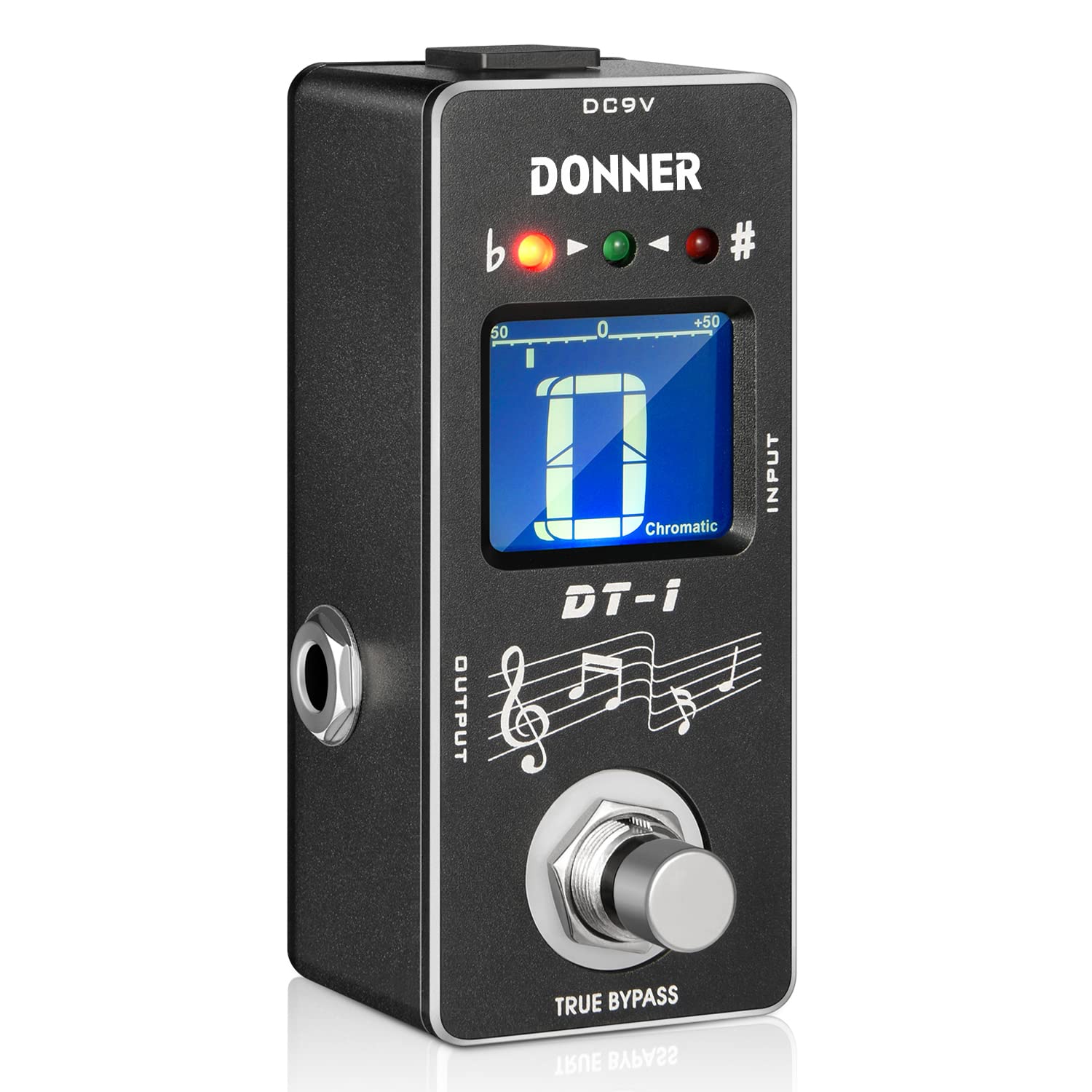
A compact chromatic tuner for bassists and guitarists who want clear tuning feedback and a silent tuning mode on a pedalboard.
- Chromatic tuning range from A0 (27.5 Hz) to C8 (4186 Hz).
- Strobe tuning mode specified at ±1 cent accuracy.
- Tuning mode cuts signal output while the player adjusts the instrument.
- Bypass mode sends the instrument sound onward to the amplifier.

Pros
- Wide A0–C8 chromatic range suits a variety of tuning needs.
- Strobe mode offers a precise tuning reference for careful adjustments.
Consider before buying
- A 9-volt adapter must be purchased separately.
- There is no battery compartment, so the pedal depends on an external power connection.
Read the full review summary
The DT-1 covers notes from A0 to C8 and offers a strobe mode with stated accuracy of ±1 cent, giving players a wide range for standard instrument tuning needs.
Its two modes serve distinct purposes: tuning mode cuts the signal output, while bypass mode sends the sound onward to the amplifier.
Its small listed dimensions make it a plausible fit for a crowded board or a simple home setup, and the color LED display is designed to be easy to see.
The tradeoff is straightforward: it needs a 9-volt adapter, which is not included, and there is no battery compartment, so buyers should account for an adapter and a compatible power connection.
The buying factors
Donner DT-1 Tuner Scorecard
Editorial scores reflect listed features and buyer fit; they are not laboratory measurements or customer ratings.
Tuning range
The A0–C8 range covers a broad span that should accommodate many guitar and bass tuning needs.
Tuning precision
The strobe mode is specified at ±1 cent, a useful precision target for players who tune carefully.
Signal control
A dedicated tuning mode cuts the output, while bypass mode routes the signal onward.
Display visibility
The matched color and brightness of the LED beads and mini LCD are designed for visibility in performance settings.
Board friendliness
The listed body dimensions are compact, which can help when pedalboard space is limited.
Power convenience
The pedal needs a 9-volt adapter, and the package does not include one or provide a battery compartment.
Key Features and Specifications of Donner DT-1 Tuner
- Chromatic tuning range from A0 (27.5 Hz) to C8 (4186 Hz).
- Strobe tuning mode specified at ±1 cent accuracy.
- Tuning mode cuts signal output while the player adjusts the instrument.
- Bypass mode sends the instrument sound onward to the amplifier.
- Mini LCD screen with color and brightness matched LED indicators, designed for visibility on large stages and outdoors.
- Requires 9-volt power; the adapter is not included, and there is no battery compartment.
- Compact listed dimensions of 1.6 × 1.9 × 3.6 inches; package includes the pedal and user manual.
Pros and Cons of Donner DT-1 Tuner
Pros
- Wide A0–C8 chromatic range suits a variety of tuning needs.
- Strobe mode offers a precise tuning reference for careful adjustments.
- Silent tuning mode cuts output while tuning, and bypass mode keeps the signal moving through the rig.
- Small listed dimensions can make it easier to fit on a pedalboard.
Consider before buying
- A 9-volt adapter must be purchased separately.
- There is no battery compartment, so the pedal depends on an external power connection.
- Players should confirm their board's available space and power arrangement before adding it.
Who Should Buy Donner DT-1 Tuner?
Good fit
Consider the Donner DT-1 if you want a dedicated tuner for bass or guitar and value a broad chromatic range with a precise strobe option.
The signal-cutting tuning mode is useful when you want to make adjustments without sending the tuned notes to the amplifier.
It may suit a compact pedalboard, provided its dimensions fit the space you have available.
Before buying, check that you have a compatible 9-volt adapter or can add one; the package does not include power, and battery operation is not an option.
Who should skip it
Look elsewhere if you specifically need a tuner that can run from an internal battery or if you want a pedal that arrives with its power adapter.
Also check the display size and viewing angle against your performance setup if you need to read tuning feedback from a particular distance.
How the Donner DT-1 Tuner Fits a Bass Rig
Range and tuning precision
The A0–C8 chromatic span gives the DT-1 room to recognize notes across a broad range of pitches.
Its strobe mode is specified at ±1 cent accuracy, which may appeal to players who prefer a finer tuning reference; actual convenience depends on how comfortably you can read the display and adjust your instrument.
Two modes for two moments
The tuning mode cuts signal output while you make adjustments, creating a quieter tuning step in a live or practice chain.
Bypass mode sends the instrument sound onward to the amplifier, so the pedal can remain in the signal path when you are playing. These are practical functions for a tuner, without requiring a separate tuning setup.
Display and placement
The mini LCD and matched LED color and brightness are intended to make the display easier to see, including in stage and outdoor settings.
The compact listed dimensions may help on a crowded board, but check the available footprint and your preferred sightline before settling on a position.
Power planning
The pedal uses 9-volt power, but no adapter is included and there is no battery compartment.
Buyers should confirm that their power supply has a compatible connection before adding the DT-1 to a board; anyone building a minimal setup should include the cost and space of the required adapter in the decision.
Alternatives to Donner DT-1 Tuner
Electric Guitar Effects alternative
1,000+ ratings
Read Amazon ReviewsDonner Morpher Distortion Pedal
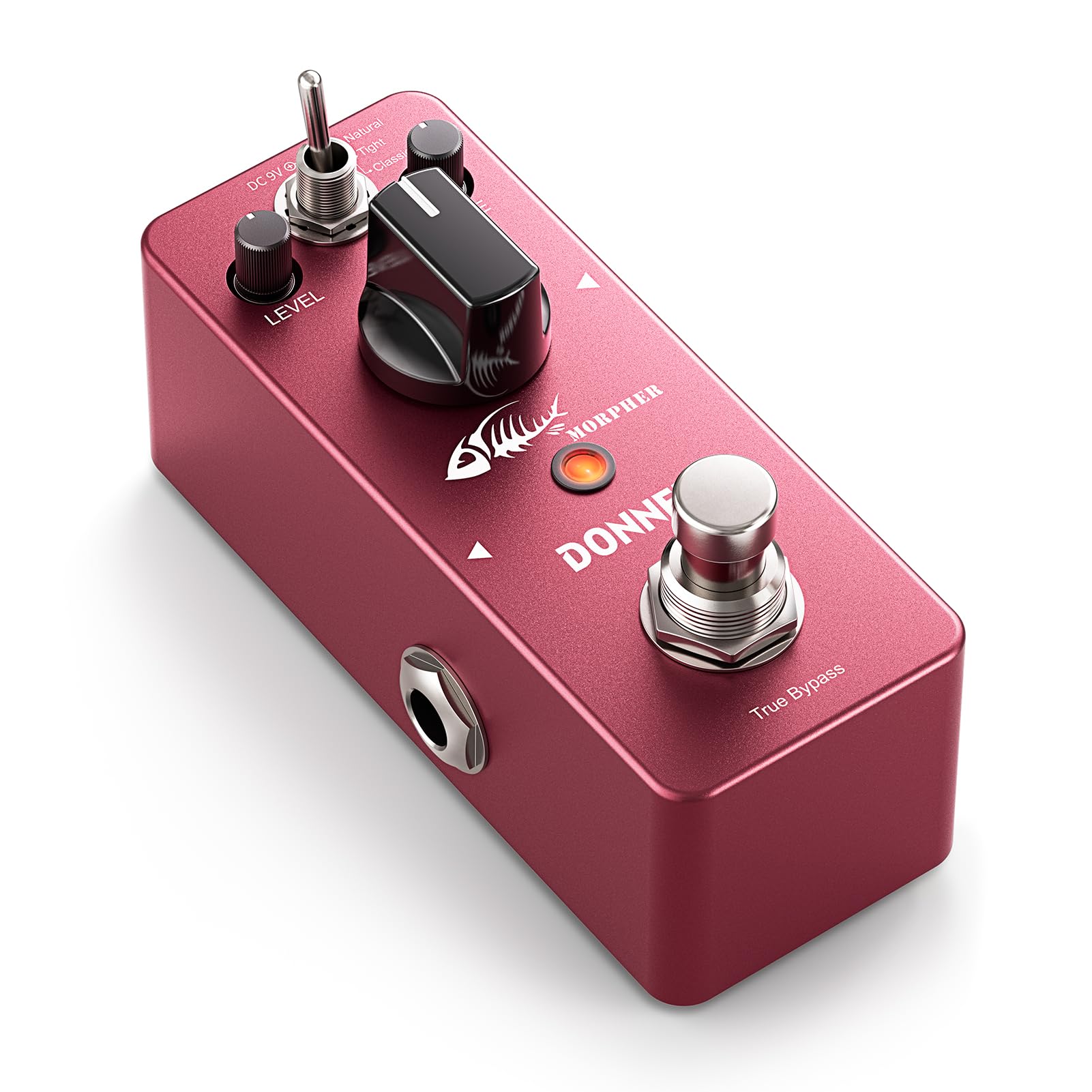
Choose the DT-1 when accurate tuning and a signal-cutting tuning mode are the need. The Morpher addresses a different task: it is the more relevant pick when you want high-gain distortion with three voicings rather than a tuner.
- The Morpher is a high-gain distortion pedal with three modes—Natural, Tight, and Classic—and a true-bypass design. It needs a 9-volt DC adapter, which is not included.
- The DT-1 is a chromatic tuner with a tuning mode that cuts signal output and a bypass mode for routing the signal onward.
Electric Guitar Effects alternative
1,000+ ratings
Read Amazon ReviewsDonner Ultimate Comp Compressor Pedal
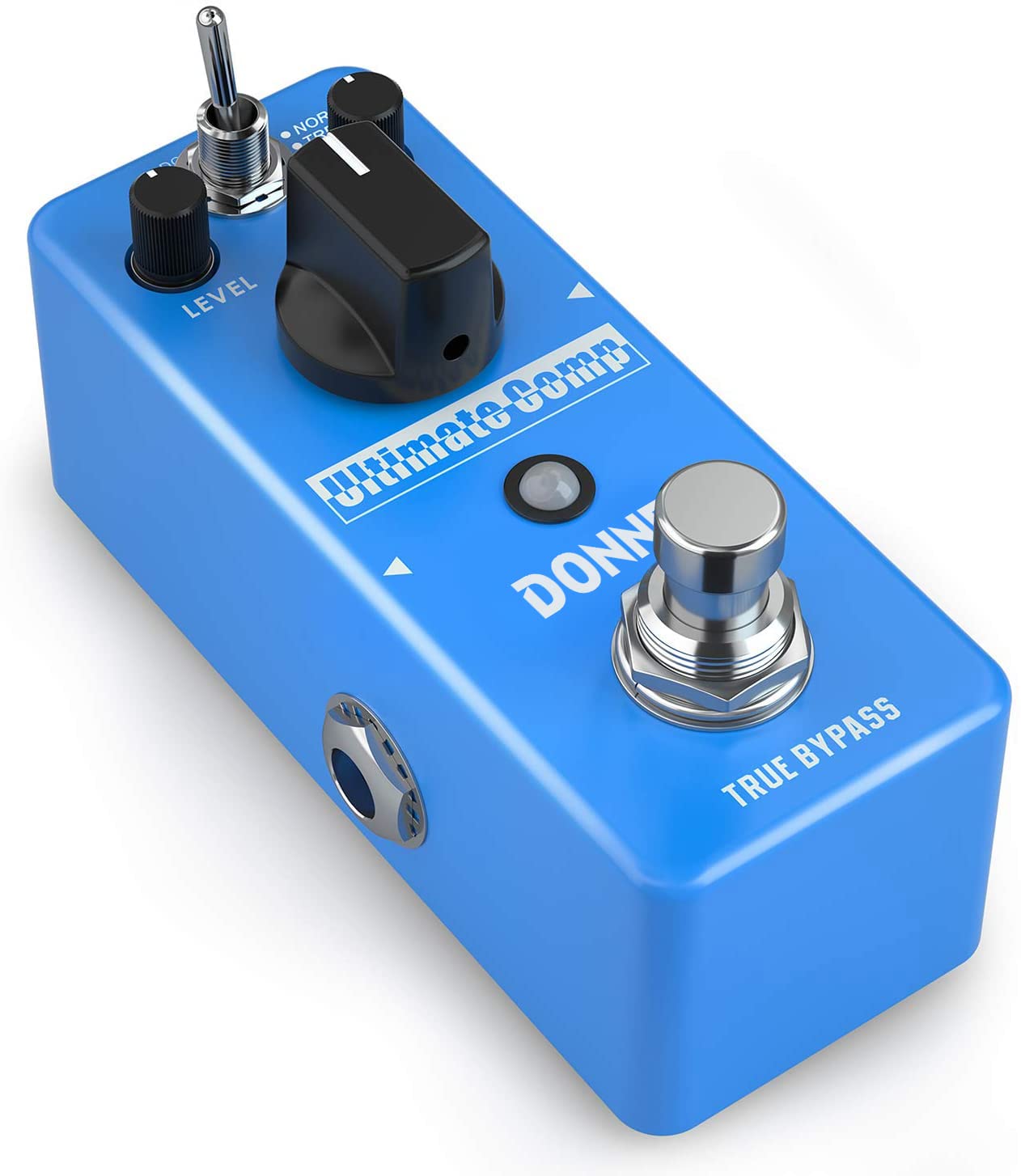
For keeping a tuner available on the board, the DT-1 matches the job. The Ultimate Comp makes more sense if your priority is shaping dynamics and output instead of tuning.
- The Ultimate Comp is a compressor for guitar and bass with COMP, TONE, and LEVEL controls plus NORMAL and TREBLE modes; its power adapter is not included.
- The DT-1 focuses on tuning, with a wide chromatic range, strobe mode, and two signal modes.
Is Donner DT-1 Tuner Worth It?
The Donner DT-1 is worth considering as a compact, dedicated tuner for bass and guitar players who want a broad chromatic range, a strobe mode, and signal-cutting tuning.
Its bypass mode also lets it serve as a practical part of a pedalboard signal chain.
Plan for a separate 9-volt adapter and confirm the pedal will fit your board and viewing position. If those setup details work for you, the DT-1 offers a focused set of tuning features without adding unrelated effects.
Your review at a glance
4,000+ ratings
Read Amazon ReviewsDonner DT-1 Tuner Pedal
A compact chromatic tuner for bassists and guitarists who want clear tuning feedback and a silent tuning mode on a pedalboard.
- Chromatic tuning range from A0 (27.5 Hz) to C8 (4186 Hz).
- Strobe tuning mode specified at ±1 cent accuracy.
- Tuning mode cuts signal output while the player adjusts the instrument.
- Bypass mode sends the instrument sound onward to the amplifier.