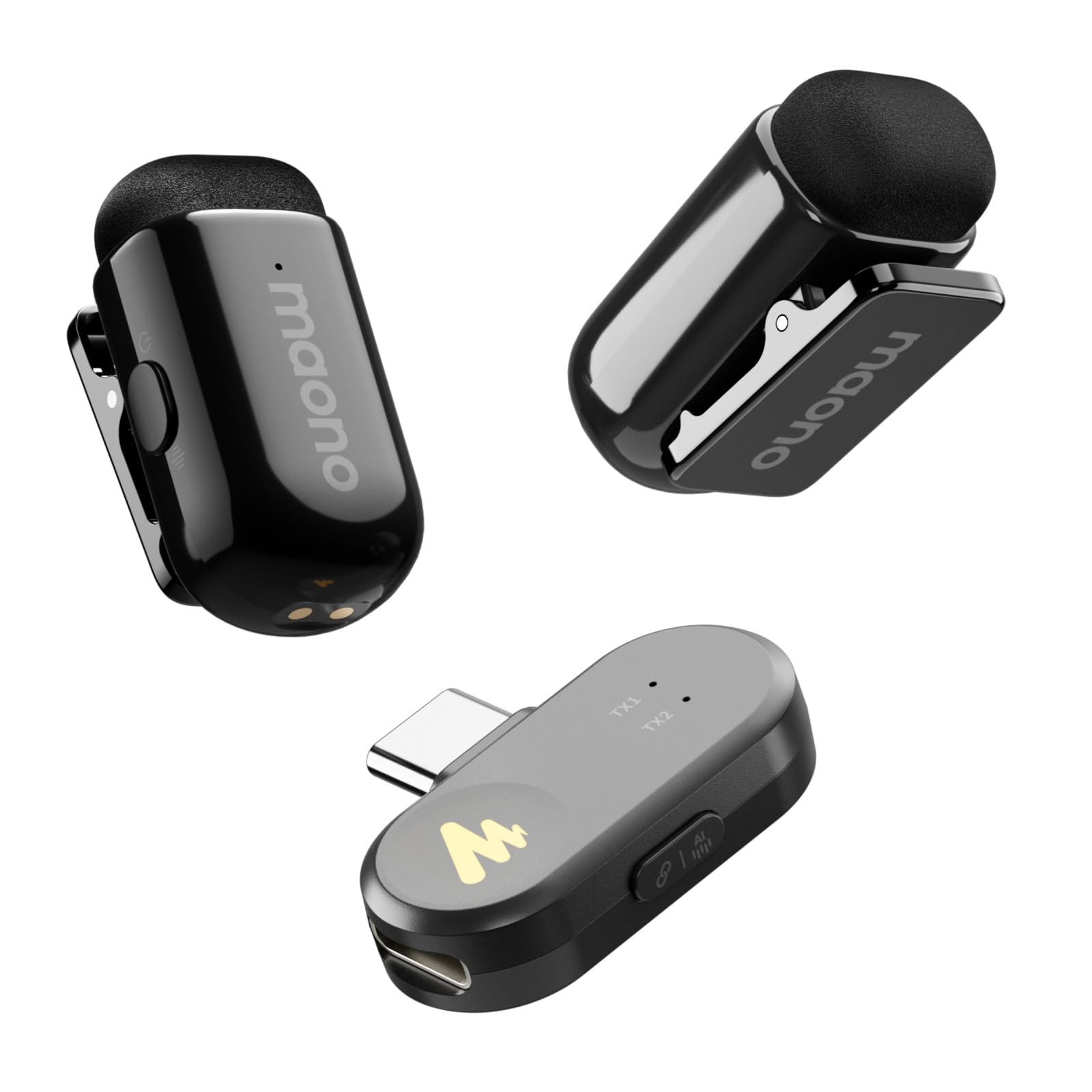
The MAONO Wave T1 Mini is a compact wireless lavalier system for phone-first video, streaming, and interviews.
This maono lavalier microphone review looks at its adjustable noise controls, app effects, USB-C receiver, and the compatibility details buyers should check.
Wave T1 Mini Review Summary
The quick verdict
1,000+ ratings
Read Amazon ReviewsMAONO Wave T1 Mini
A compact USB-C wireless lavalier for creators who want adjustable noise reduction, app-based voice effects, and charging during recording.
- USB-C receiver designed for compatible Android phones, tablets, computers, and other listed devices.
- 48 kHz/16-bit audio capture, with a listed 20 Hz–20 kHz frequency range.
- Noise reduction with four levels and a one-click control; the product details also describe 10-level adjustment.
- Gain control offers up to 32 dB of adjustment, alongside smart automatic limiting.

Pros
- Compact, phone-oriented design keeps a mobile recording setup simple.
- Multiple noise, gain, EQ, and voice controls give creators useful ways to adjust sound for different formats.
Consider before buying
- The transmitter’s working time is up to six hours, so longer recording days may require a charging break.
- Lightning-device owners need an OTG-compatible USB-C-to-Lightning adapter, which is a separate compatibility step.
Read the full review summary
The Wave T1 Mini combines a USB-C receiver with a clip-on wireless microphone, noise reduction controls, gain adjustment, and voice effects through the Maono Link app.
Its stated transmission range reaches up to 328 feet in suitable conditions, and the receiver can charge a connected device while recording—useful for longer sessions where phone battery matters.
It suits solo creators who record on USB-C phones or tablets and want a small setup with creative audio adjustments.
The one-transmitter setup described here is geared toward an individual voice; buyers who need two people recorded at once, a Lightning connection, or a camera-ready receiver should verify their exact setup before choosing.
The buying factors
Wave T1 Mini Scorecard
Editorial scores reflect listed features and buyer fit; they are not laboratory measurements or customer ratings.
Phone-first convenience
The USB-C receiver is plug-and-play on supported devices, and the system is designed for mobile recording.
Audio control options
Noise reduction, gain control, automatic limiting, EQ presets, and app voice effects offer several ways to shape a recording.
Wireless flexibility
The stated range is up to 328 feet, which offers room to move when the connection and environment support it.
Recording stamina
The microphone’s working time is up to six hours, while the receiver supports device charging during recording.
Setup simplicity
Plug-and-play operation is straightforward on compatible USB-C devices, though some Android phones require OTG to be enabled.
Connection versatility
USB-C supports a range of phones, tablets, and computers, but Lightning use requires a separate OTG-compatible adapter.
Key Features and Specifications of Wave T1 Mini
- USB-C receiver designed for compatible Android phones, tablets, computers, and other listed devices.
- 48 kHz/16-bit audio capture, with a listed 20 Hz–20 kHz frequency range.
- Noise reduction with four levels and a one-click control; the product details also describe 10-level adjustment.
- Gain control offers up to 32 dB of adjustment, alongside smart automatic limiting.
- Maono Link app provides four EQ presets, four voice filters, and four voice-altering effects, with real-time noise and gain adjustment.
- Up to six hours of working time and fast charging; the receiver can charge a connected device while recording.
- Up to 328 feet of stated wireless transmission range, plus a long-press remote control for photo capture or video recording.
Pros and Cons of Wave T1 Mini
Pros
- Compact, phone-oriented design keeps a mobile recording setup simple.
- Multiple noise, gain, EQ, and voice controls give creators useful ways to adjust sound for different formats.
- The receiver’s pass-through charging can help during extended phone recording.
- The stated wireless range allows movement away from the recording device when conditions permit.
Consider before buying
- The transmitter’s working time is up to six hours, so longer recording days may require a charging break.
- Lightning-device owners need an OTG-compatible USB-C-to-Lightning adapter, which is a separate compatibility step.
- Some Android phones require OTG to be enabled before pairing, adding setup work on those devices.
Who Should Buy Wave T1 Mini?
Good fit
Consider the Wave T1 Mini if you make solo videos, streams, or interviews with a compatible USB-C phone and want more control than a basic plug-in mic offers.
Its noise reduction, gain adjustment, EQ presets, and voice effects give you options for adapting the sound and style of your recordings.
It is especially appealing when you record with a phone for extended sessions: the receiver can charge the device while recording, and the long-press remote can trigger photo or video capture.
Before buying, confirm that your phone accepts the USB-C receiver and that your typical recording blocks fit within the transmitter’s up-to-six-hour working time.
Who should skip it
Look elsewhere if you need two speakers captured simultaneously: the described setup centers on a single clip-on microphone, and dual-channel recording in the specifications does not by itself establish a two-transmitter kit.
This is a less direct fit for Lightning-only devices or setups that depend on a particular camera connection. Check adapter requirements and your recording app or device workflow before relying on it for a specific production.
What the Wave T1 Mini Means for Mobile Recording
Controls for changing recording conditions
The combination of noise reduction, gain control, automatic limiting, and app adjustments gives creators several points of control when moving between quieter rooms and noisier surroundings.
These are adjustment tools rather than a guarantee that every background sound will disappear, so leave time to check levels and listen to a short sample before recording something important.
Range and practical placement
A stated maximum of 328 feet gives the system flexibility for scenes where the speaker needs to move away from the phone.
Real-world range depends on the recording environment and connection conditions, so treat the maximum as an upper limit and test the intended distance in the actual location.
Battery planning for longer sessions
Up to six hours of transmitter working time makes this a fit for many individual recording blocks, while pass-through charging on the receiver can help preserve the connected device’s battery.
For a full day of filming, plan around the microphone’s runtime and available charging opportunities.
Compatibility is part of setup
USB-C is the primary connection, with support described for compatible phones, tablets, computers, and other devices.
Some Android phones may need OTG enabled, and Lightning devices need an OTG-compatible adapter; checking the device connection and recording workflow in advance can avoid setup surprises.
Alternatives to Wave T1 Mini
Battery-focused alternative
200+ ratings
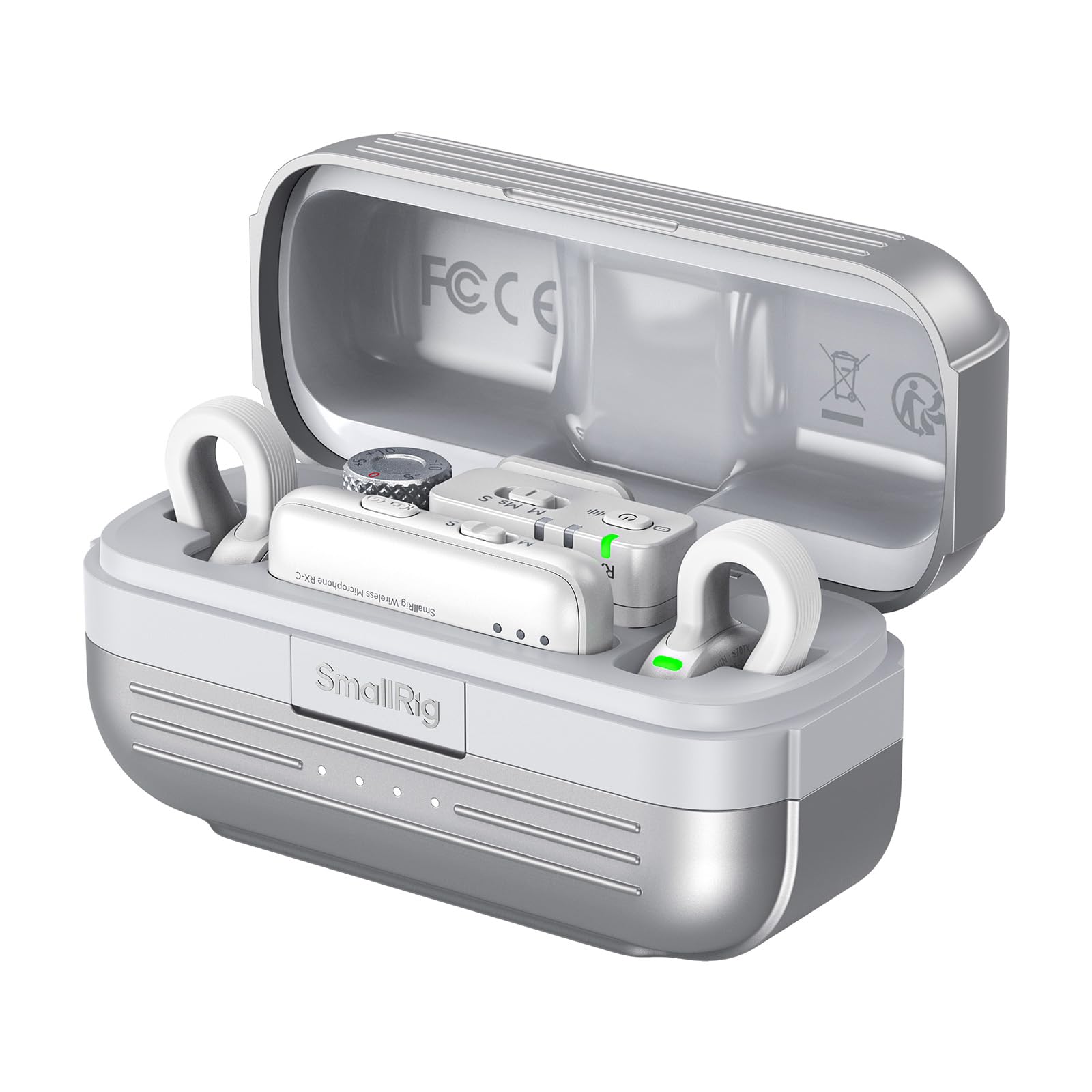
Read Amazon ReviewsSmallRig Wireless Mic S70
Choose the Wave T1 Mini for a compact solo phone workflow and its app effects.
The S70 is a stronger fit when you need two microphones, a 3.5 mm camera connection, or a charging case for longer use; confirm its stated device compatibility for your specific camera.
- The SmallRig S70 includes two transmitters, a receiver with USB-C and 3.5 mm connections, and a charging case.
- It offers up to eight hours per charge and over 40 hours with the case, plus 48 kHz/24-bit recording and selectable mono, safety-track, or stereo modes.
- The Wave T1 Mini centers on a USB-C receiver, app-based voice effects, and up to six hours of transmitter use.
Battery-focused alternative
3,000+ ratings
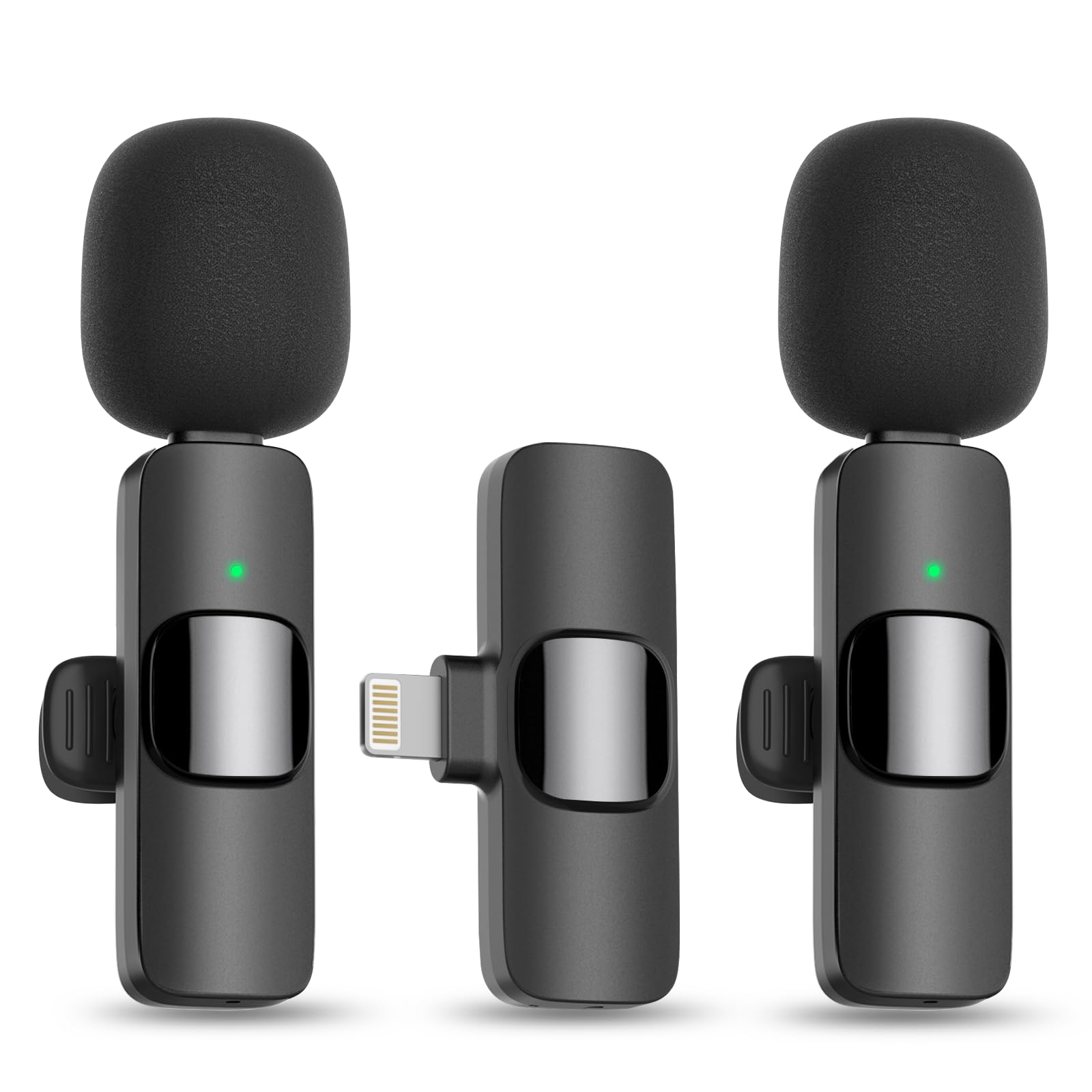
Read Amazon ReviewsMAYBESTA WM350 Wireless Mini Microphone
For a Lightning phone and two-person recordings, the MAYBESTA kit may be a more direct match because it includes two microphones and a Lightning connector.
The Wave T1 Mini is better aligned with USB-C devices and creators who want its app-based adjustment options; check the MAYBESTA phone compatibility carefully, since its Lightning connection does not suit USB-C iPhones.
- The MAYBESTA WM350 is a Lightning-only kit with two microphones and one receiver.
- It is described for older Lightning phones, offers up to about five to six hours of use, and has a stated wireless range of up to 50–65 feet.
- The Wave T1 Mini uses a USB-C receiver and offers app-based sound adjustments, with a separate adapter needed for Lightning devices.
Is Wave T1 Mini Worth It?
The MAONO Wave T1 Mini is worth considering for solo creators who want a compact wireless mic with meaningful sound adjustments and a USB-C phone workflow.
Noise reduction, gain control, app effects, and receiver pass-through charging make it a flexible mobile option.
Its best fit depends on your device and recording routine: confirm USB-C or adapter compatibility, allow for the up-to-six-hour transmitter runtime, and test the wireless connection where you plan to record.
If those conditions suit your setup, it offers a useful balance of portability and control.
Your review at a glance
1,000+ ratings
Read Amazon ReviewsMAONO Wave T1 Mini
A compact USB-C wireless lavalier for creators who want adjustable noise reduction, app-based voice effects, and charging during recording.
- USB-C receiver designed for compatible Android phones, tablets, computers, and other listed devices.
- 48 kHz/16-bit audio capture, with a listed 20 Hz–20 kHz frequency range.
- Noise reduction with four levels and a one-click control; the product details also describe 10-level adjustment.
- Gain control offers up to 32 dB of adjustment, alongside smart automatic limiting.